What are you building?
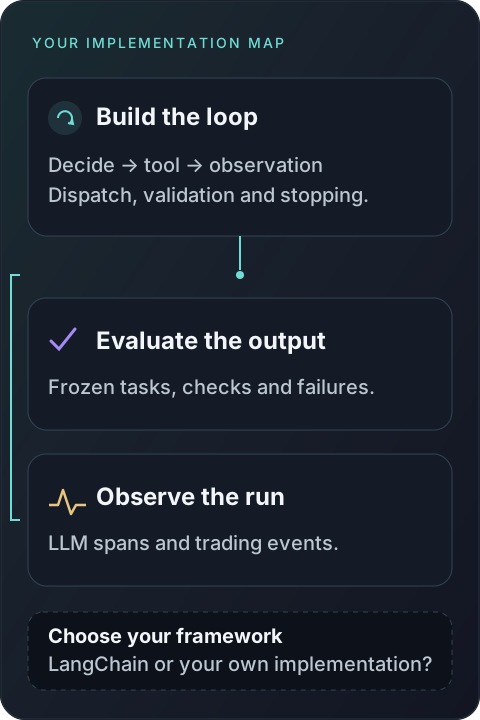
Start with the failure or output you need to inspect
Show the table · 6 rows, 2 columns
| Task | Concrete starting artifact |
|---|---|
| Build a loop | A local two-decision, one-tool exposure calculation returning 80.00%. |
| Dispatch tools | SPY 20% preview plus INVALID_ARGUMENTS and UNKNOWN_TOOL receipts. |
| Read model traces | A local summary with 140ms step time and two unknown-cost steps. |
| Diagnose trading | Two fixture records: one BuySignal and one OrderRejected, with zero Order records. |
| Compare frameworks | The same handler and correlated receipts in a custom dispatcher and LangChain adapter. |
| Evaluate outputs | Freeze requests and inspect each expected/actual judgment and failure, rather than only an average score. |
No matching rows. Clear the filter to see all records.
These local outputs are downloadable teaching fixtures. Choose the implementation task in the guide list to run its exact inputs and inspect its result before connecting a model or account.
Here to connect your app instead?
These guides explain implementation. For account-scoped SDK or MCP access to NexusTrade, start with the developer setup page.
Discussion
Sign in or create a free account to join the discussion.
No comments yet.