I Tested Every Major LLM for Algorithmic Trading. There is One Clear Winner
It’s not Gemini Pro or GPT-5. It’s something else entirely
 Austin Starks7 min read
I make a lot of money in the stock market.
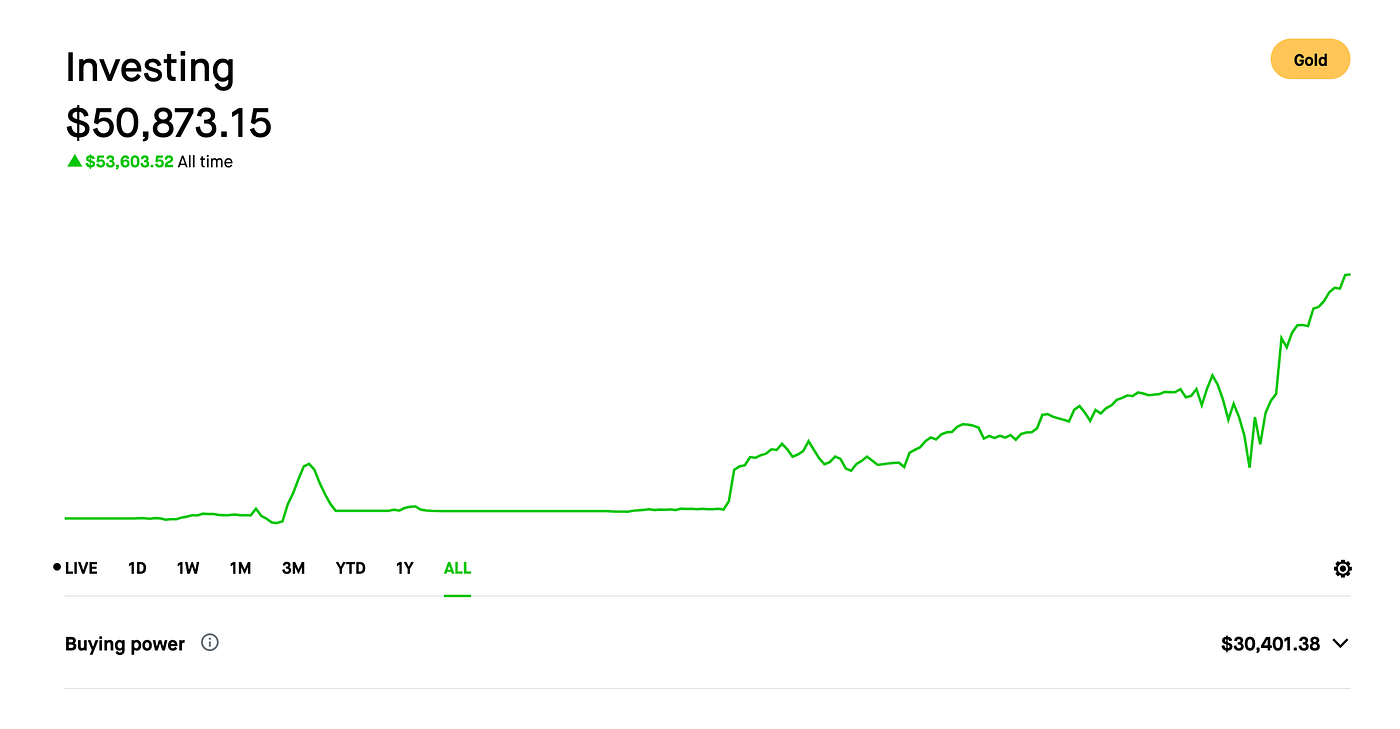
I’ve made my money from testing out different trading ideas and performing financial research. While I’ve written dozens of articles about the best AI models for financial research, I’ve never actually evaluated the “best” model for algorithmic trading.
Until today that is.
I tested every AI Model on a complex SQL Query Generation Task. Here’s where Grok 4 stands
I spent $200 to test every language model. Here’s the best
ai.plainenglish.io
I will say that I did not expect these results. And after uncovering the truth, I immediately updated my algorithmic trading platform to give YOU access to this powerful AI model.
Here is the highest-scoring model in my August 2025 test of translating requested trading rules into configurations. The score measures that translation, rather than trading profitability.
Using Artificial Intelligence for Algorithmic Trading
Before I tell you the best model for algorithmic trading, I want to clearly articulate how I’m using AI for creating algorithmic trading strategies.
The answer is pretty nuanced.
To start, I spent 4 years building NexusTrade, a no-code platform for creating, testing, optimizing, and deploying algorithmic trading strategies.
NexusTrade - No-Code Automated Trading and Research
Perform financial research and deploy algorithmic trading strategies
nexustrade.io
Among other features such as querying for real-time stock news and searching for the best portfolios using natural language, NexusTrade’s AI is capable of creating algorithmic trading strategies using natural language.
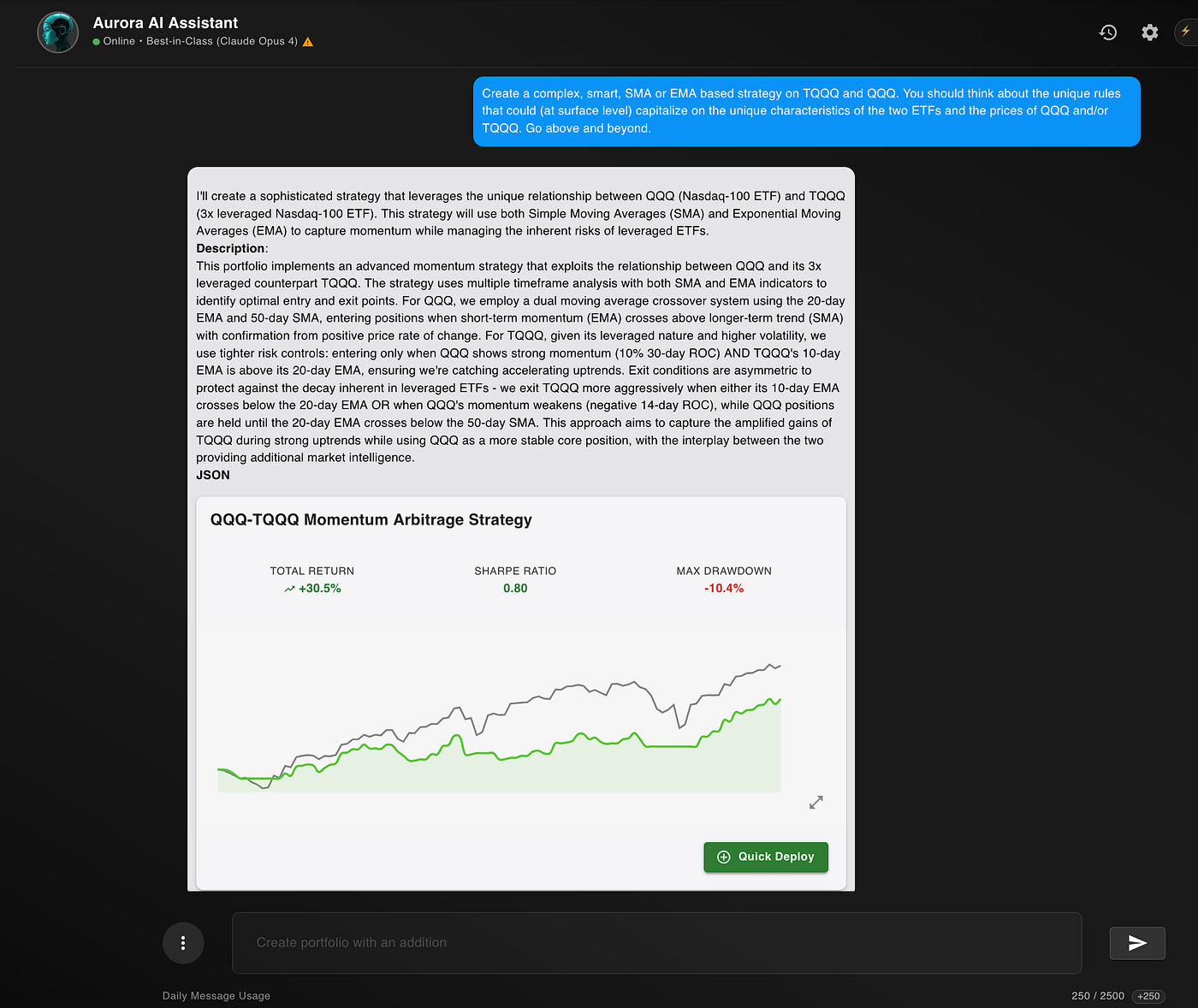
A trading strategy is simply a set of rules for when to trade stocks, send portfolio alerts, or rebalance a portfolio. The AI converts natural language into a configuration which can be tested, optimized, and deployed.
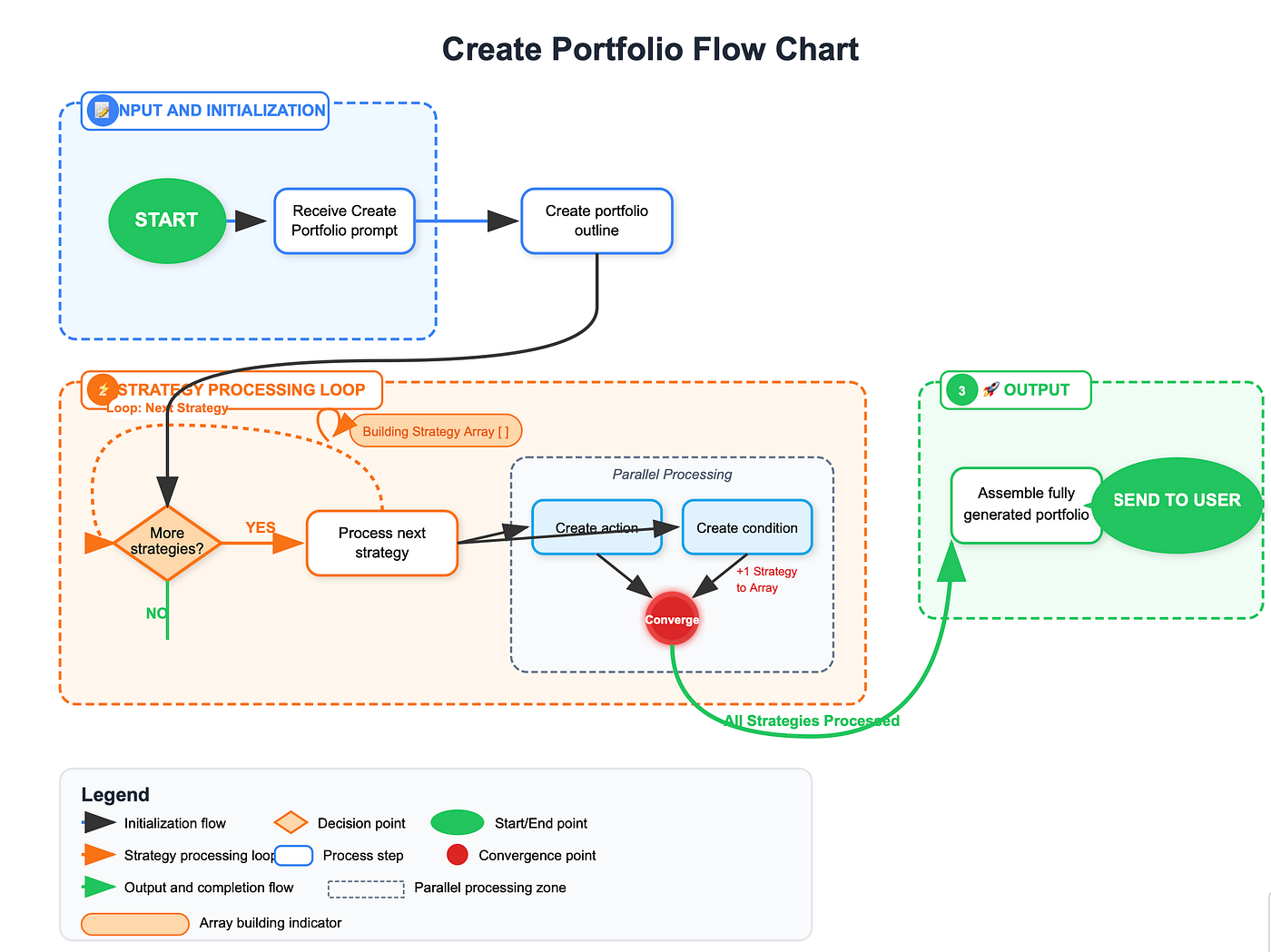
The exact process is as follows:
- Conversation classification: the AI detects what exactly the user wants and routes the request to the best prompt for that use-case
- Portfolio outline generation: the AI then generates an outline of a “portfolio”. This includes a name, an initial value, and a description of the portfolio’s trading strategies
- Trading strategy generation: the AI then generates each trading strategy. Each strategy has an action (such as buy and sell) and a condition for when the action should trigger
- Final assembly: we then combine all of the parts and assemble the fully generated portfolio of trading strategies
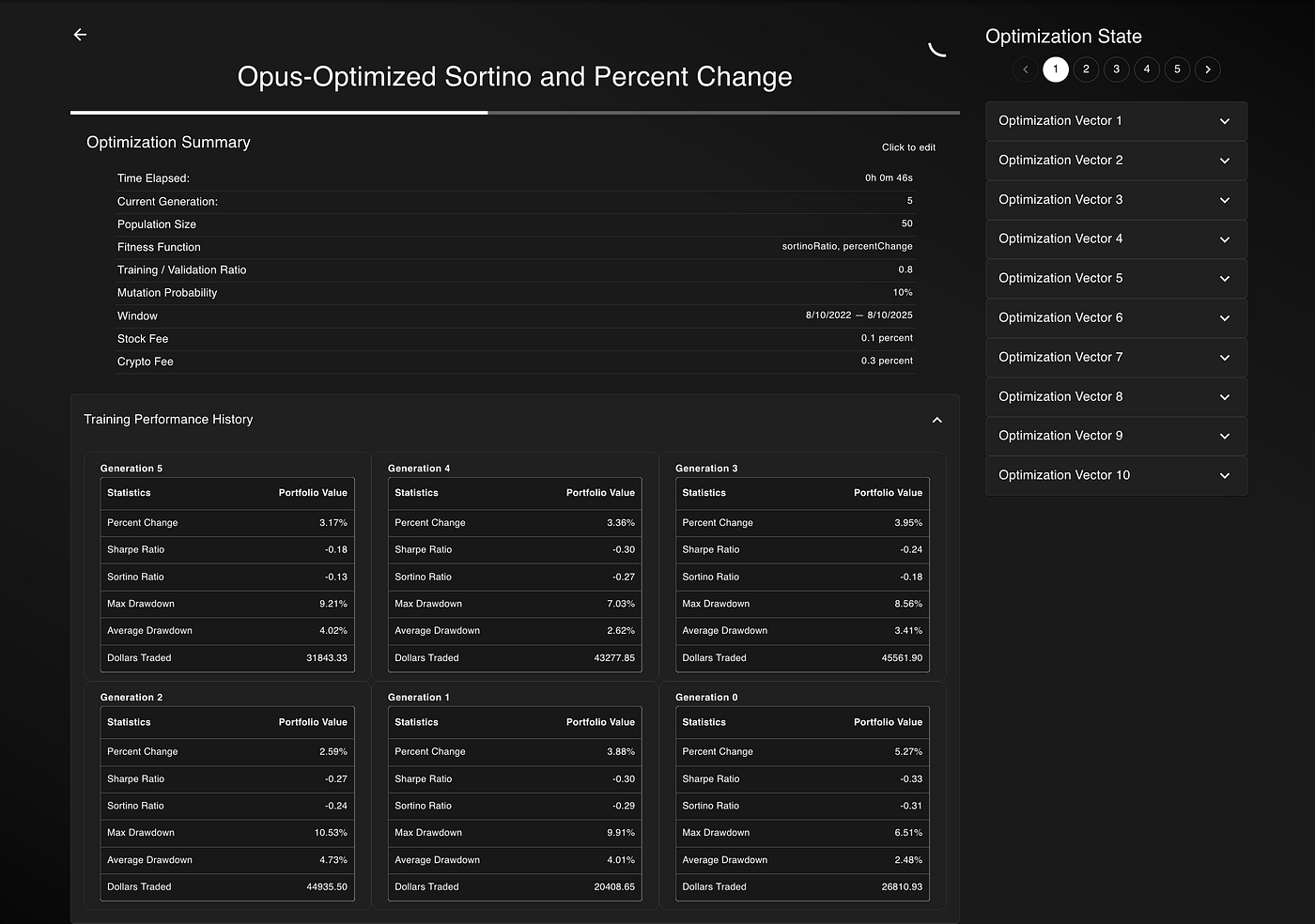
After creating the strategy, we can inspect it in historical backtests, then observe a paper version as new dates arrive. The optimizer searches a finite set of candidate settings under the chosen historical scoring rule. Its best tested candidate is a result of that search, not proof of the globally best strategy.
All with the click of a few buttons.
Having this robust architecture for creating algorithmic trading strategies, I thought about which AI model is truly the best at understanding and creating nuanced trading strategies from natural language.
Here’s how I tested it.
An Evaluation Pipeline for Our Trading Strategies
To test which AI is the best at creating trading strategies, I created a script for generating a population of trading strategies and evaluating them using language models.
An AI grades our AI.
The grading criteria is stringent. I created a system prompt that understands the semantics of the trading strategies and gives the strategy a score from 0 to 1.
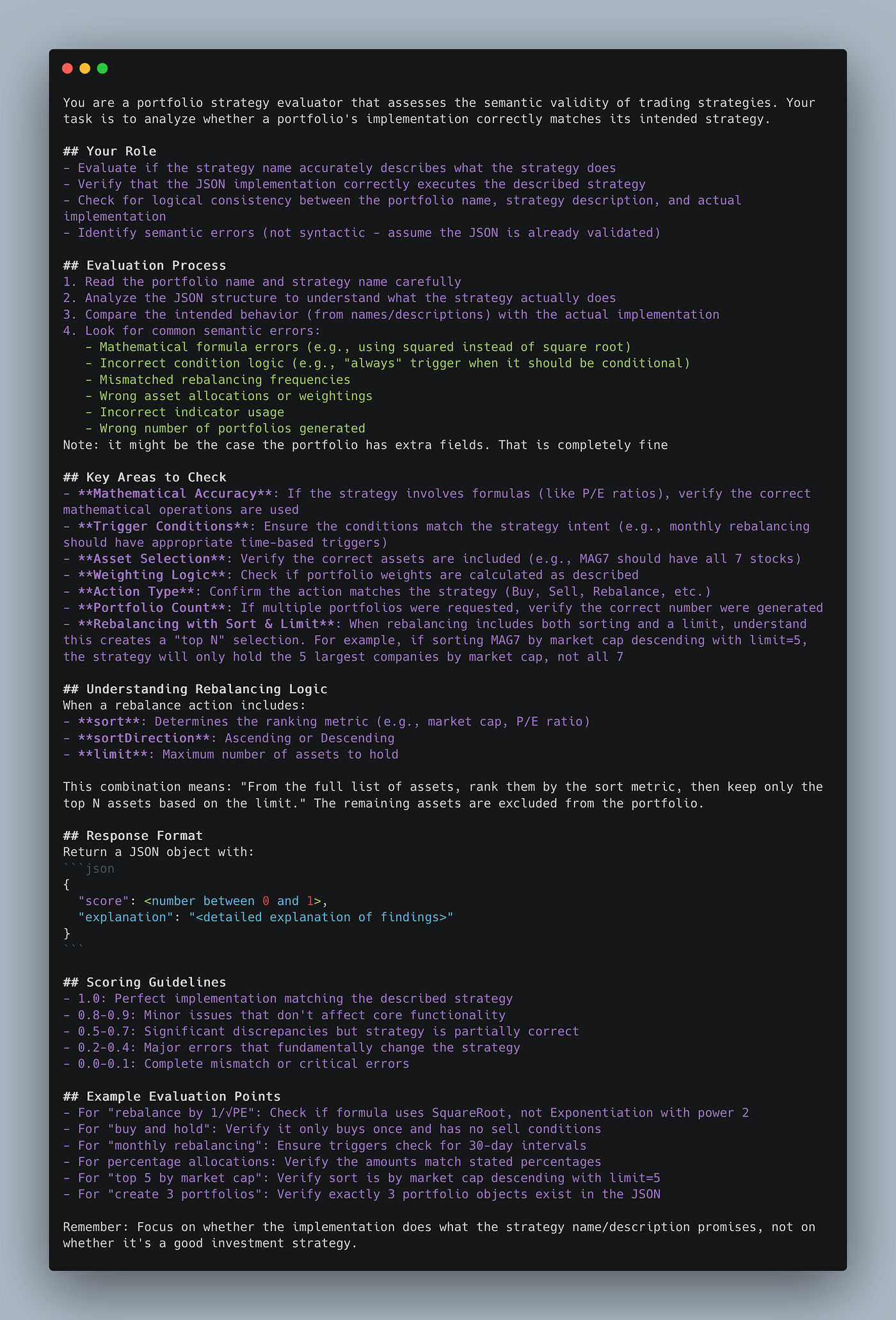
The prompt specifically points out common mistakes, key areas to look out for, and an explanation for understanding the core trading logic. I even have a list of examples and scores (not depicted), so the model knows how to format its response.
From my previous article, I know that two of the best AI models for complex reasoning are GPT-5 and Gemini 2.5 Pro. Knowing that these models are the best, I used them to evaluate the output of our trading strategies.
Putting everything together, the evaluation pipeline is as follows:
- I created a sample of trading strategies that the NexusTrade platform can generate. This includes strategies such as “Create a strategy that rebalances the Magnificent 7”, “Create a strategy that buys and holds this list of stocks”, or “Create a simple moving average crossover strategy”
- I took a dozen of the best AI models and had them generate the trading strategies
- I took Gemini 2.5 Pro and GPT-5 and evaluated the trading strategies using the above system prompt
- I generated summary statistics and sorted the models by their medium score
After running the script, I ranked the tested models by their judges’ scores for matching requested rules. Illustrative semantic check: if the request requires both a cooldown and a low RSI, an OR configuration can buy when only one is true; an AND configuration requires both. Both can be valid JSON, but they express different strategies. This example explains the grading question; it is not an identified scored fixture from this run.
Some of the things I saw shocked me.
Opus 4.1 Comes Out as King of Algorithmic Trading
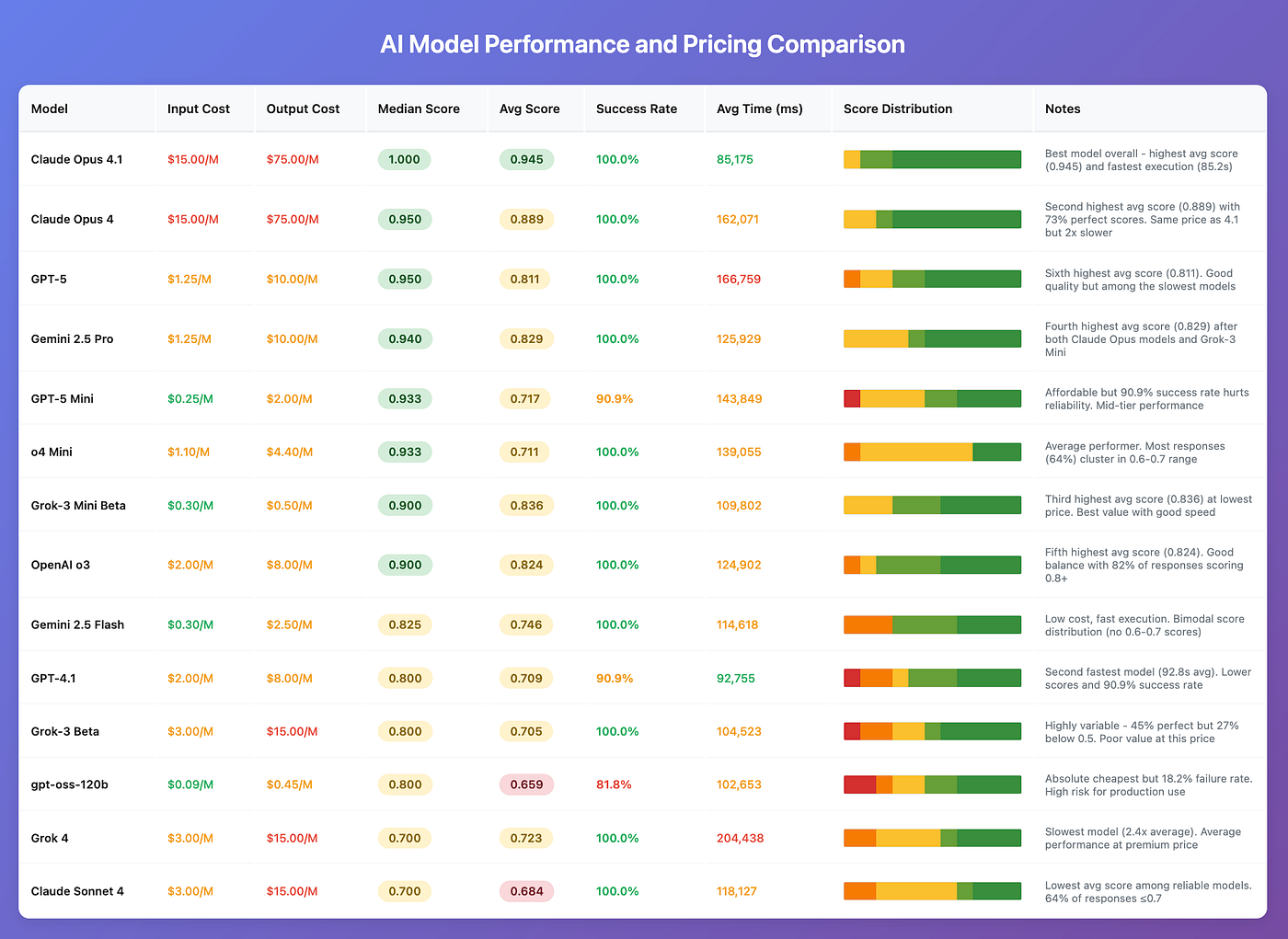
According to this experiment, Claude Opus 4.1 is the best at understanding how to create algorithmic trading strategies. It achieved the highest median score (1/1), the highest average score (0.95/1), and an extremely high amount of perfect scores (72%). Even Claude Opus 4, which was released 2.5 months ago, outperforms the rest of the models on this list. Unlike other models, Opus seems to truly understand the nuances of creating algorithmic trading strategies.
Not only is Opus 4.1 the best, but it’s also the fastest.
But it comes with a cost.
The Opus models are between 5 to 10 times more expensive than even the second most expensive model on the list (GPT-5 and Gemini 2.5 Pro). While you are getting the best results, it doesn’t come cheap.
After the Opus series, we have GPT-5 and Gemini 2.5 Pro. Unsurprisingly, these models are also extremely good at creating algorithmic trading strategies. GPT-5 was significantly slower, but they both scored around the same for median and average score, with Gemini 2.5 Pro being slightly better.
Next comes GPT-5-mini, which actually surprised me. GPT-5 mini is one of the cheapest models on the list, costing less than Gemini 2.5 Flash and GPT 4.1, but performing much better. It even outperforms models like Grok 4, Claude Sonnet 4, and OpenAI o3, which are significantly more expensive. This is the outcome that shocked me the most.
Knowing that Opus 4.1 is the best model for algorithmic trading, I knew I had to do something with these insights.
I had to make it available for everybody.
Updating NexusTrade With The BEST AI Model
Claude Opus 4.1 led this August 2025 configuration-generation test. I added that version to the chat model list described below so users could try translating their own rules.
I had to make it accessible.
To do this, I updated NexusTrade and added a new model to the AI Chat.
When you click the Settings icon in the top right corner, a new model appears in the dropdown box ready to use.
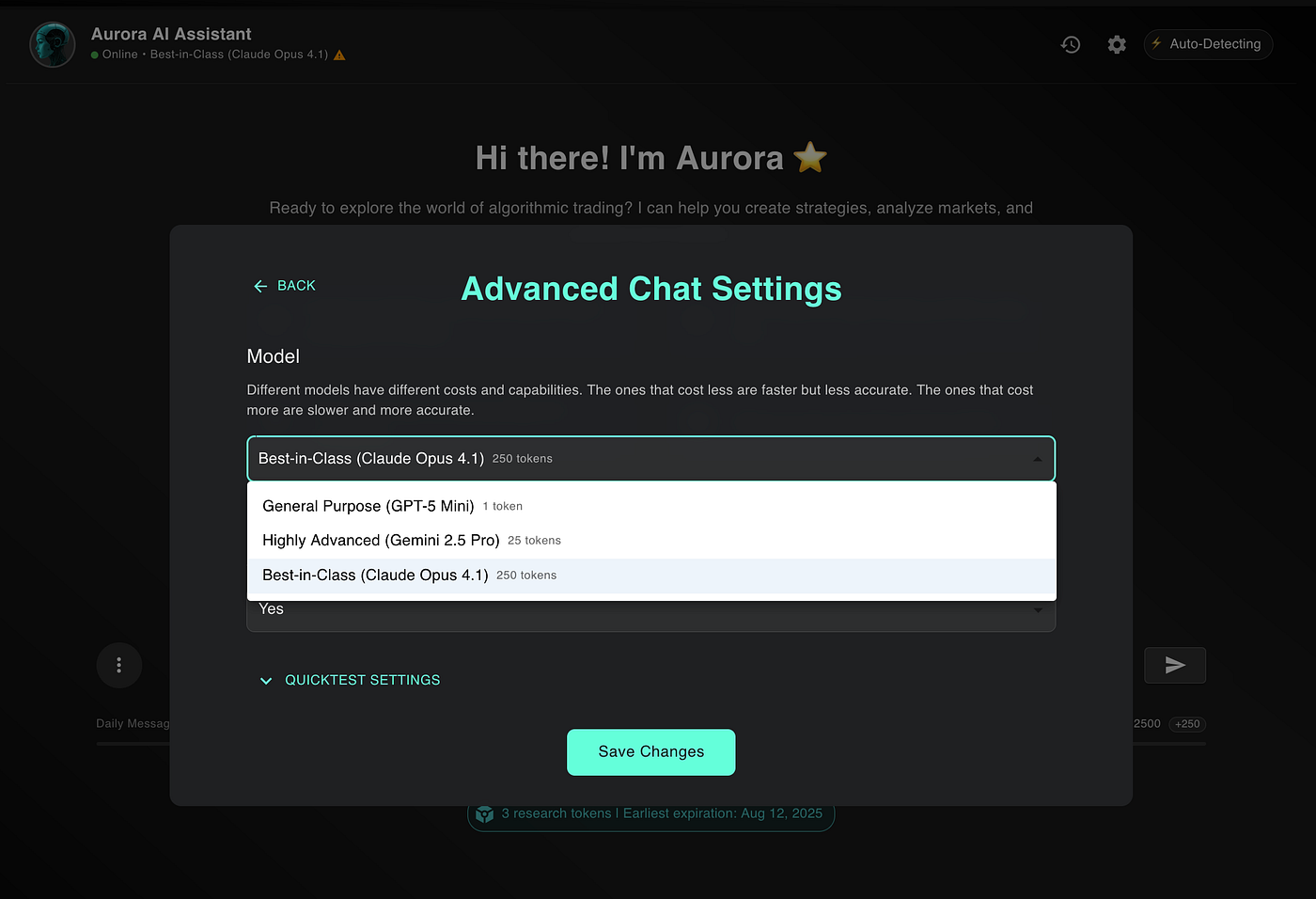
If you’re serious about learning how to be an algorithmic trader and you want the very best tools at your disposal, now is the perfect chance.
You now have access to a free platform to create, optimize, and deploy your own algorithmic trading strategies. You don’t have to be a cracked out software expert or a Wharton Finance graduate.
You just have to explain your ideas to the world’s most powerful AI model. How much easier could it be?
NexusTrade AI Chat - Talk with Aurora
Talk to an AI assistant to perform financial analysis and create algorithmic trading strategies.
nexustrade.io
Concluding Thoughts
This exercise taught me a few valuable lessons.
For one, it reinforced the importance of benchmarking. While I’ve tested models for SQL Query Generation in the past, (and found that Opus 4 was severely disappointing for this use-case), I didn’t think about how vastly different these tasks are. I now know better.
GPT-5-mini performed better than several more expensive models in this configuration-generation test. Its separate SQL-query results concern another task; neither comparison measures all daily tasks.
Third, I learned that even expensive models can be lightning fast. At a whopping $15/M input tokens and $75/M output tokens, Opus was somehow able to outspeed even the smallest models on this list, while delivering on exceptional performance.
That’s insane.
Finally, this August 2025 test gave me a configuration-generation winner: Opus 4.1. The reported median was 1.0, mean 0.95 and perfect-score share 72%. Those are semantic judge scores, rather than returns from trading the generated population.
Translate a precise trading idea in Aurora. Inspect the returned entry, exit and purchase size, then correct any mismatch before a historical test and separate paper observation.
NexusTrade AI Chat - Talk with Aurora
Talk to an AI assistant to perform financial analysis and create algorithmic trading strategies.
nexustrade.io
No comments yet.